

In our interactions with students, professionals, and career changers, one pattern repeats often—people hesitate to speak up for what they need at work. Whether it’s about requesting leave, needing clarity, asking for flexible hours, or setting boundaries with respect, the fear of being judged or rejected often takes over.
At Truvisory, we guide professionals to express their needs confidently—not just to survive but to thrive. That’s why I’m introducing a method I personally admire and recommend:
✅ The D.E.A.R.M.A.N. Method
Originally developed in the therapeutic world (Dialectical Behavior Therapy), DEARMAN is now recognized as a powerful workplace communication tool—especially when it comes to sensitive conversations.
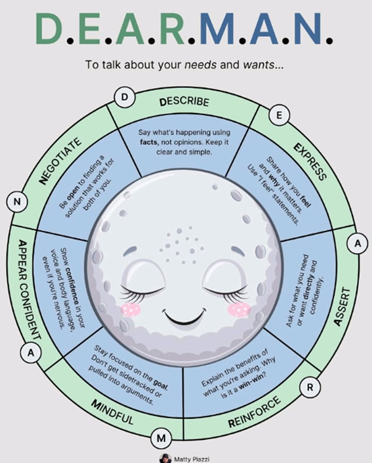
Step-by-Step Guide (with Professional Examples)
1. D — Describe the Situation
Start with facts—don’t assume or dramatize.
🧾 Example (Finance Analyst):
“Over the past two months, I’ve led the quarterly audit prep, balance sheet reviews, and vendor reconciliations without any personal time.”
💻 Example (IT Professional):
“I’ve worked three weekends in a row to meet sprint deadlines and resolve backend deployment bugs.”
2. E — Express Your Feelings
Use “I feel…” to communicate how it affects you.
🧾 “I’m feeling mentally fatigued, and I think a short break would help me reset and stay productive.”
💻 “I’m beginning to feel burned out, and I want to stay consistent with my deliverables.”
3. A — Assert What You Need
State your need clearly—don’t hint or soften too much.
🧾 “I’d like to take this Friday off to rest and recharge.”
💻 “I’d prefer working remotely on Thursday to manage a health appointment and still stay on track.”
4. R — Reinforce the Positives
Make it a win-win. Show how your request supports the larger goal.
🧾 “Taking a day now ensures I return with full focus for the next month’s reporting cycle.”
💻 “Remote work on Thursday lets me handle the situation without losing momentum on the sprint.”
5. M — Be Mindful
Stay calm. Don’t let the discussion shift focus.
📌 If your manager says:
“But we’re short-staffed this week…”
Respond:
“I understand, and I’m happy to complete all urgent items before I take the day.”
6. A — Appear Confident
Use strong body language and tone. Avoid:
❌ “If that’s okay…”
❌ “I don’t know if this is possible…”
✅ Say:
“This is important for my performance and wellbeing, so I’d like to request it confidently.”
7. N — Negotiate
Be open to alternatives.
🧾 “If Friday is difficult, I can shift to Monday or take a half-day instead.”
💻 “I’m okay to swap with a teammate or make up the hours across this week.”
💼 More Real-World Use Cases
🧪 Pharma Regulatory Affairs (WFO):
“I’ve been coordinating submissions for four markets this quarter. I’d appreciate Friday off to manage some personal responsibilities. I’ll make sure all key reviews are cleared by Thursday.”
🧑💼 HR Executive:
“I’ve onboarded 15 new hires this month and run multiple orientation sessions. I’d like to block a wellness day this Friday to reset.”
🏢 Admin Officer (Facility Head):
“We’ve had several vendor escalations this week, and I’ve addressed them all. I’d appreciate half-day leave Thursday afternoon to visit the hospital with my father. I’ll ensure my desk is cleared before then.”
Final Thoughts from Ramchandran
At Truvisory, we don’t just help you build careers—we help you build the confidence to stand up for yourself, respectfully and responsibly.
💡 Remember:
You’re not being difficult.
You’re not weak.
You’re just being honest—and that’s a strength.
Let’s build a world where professionals feel safe to express their needs.
Let’s normalize wellness in the workplace.
Let’s grow—not just professionally, but personally.
“Let’s build a world where everyone belongs through the power of wellbeing.”
— Matty Piazzi
Every step, however difficult, is building the person you are becoming